Choosing the 2026 best double light headlamp requires more than comparing brightness numbers. A reliable Headlamp Double Light should balance beam distance, flood coverage, battery endurance, comfort, and weather protection. It should illuminate a narrow trail while keeping nearby roots, tools, and map details visible. That difference matters after several hours outdoors.
Grand View Research reports continued growth in the global headlamp market, driven by outdoor recreation, industrial work, and emergency preparedness. Research and Markets also identifies rechargeable batteries, lightweight designs, and improved LED efficiency as major product trends. However, market forecasts vary by methodology. Buyers should treat growth percentages as guidance, not certainty. Battery claims deserve similar caution. Maximum lumens rarely describe sustained brightness.
“Light quality is a combination of visibility, comfort, and control,” says Dr. Mariana Figueiro, a recognized lighting researcher at Mount Sinai. Her observation applies directly to dual-beam headlamps, although it does not replace field testing. A bright beam can still create glare, harsh shadows, or poor peripheral awareness. That is easy to overlook.
This guide examines real-world performance across hiking, running, maintenance, camping, and low-temperature use. It considers measured runtime, charging behavior, headband stability, beam switching, IP protection, and replacement-battery practicality. Some models may appear impressive on paper but disappoint after repeated use. That is the uncomfortable part.
Good specifications help. Hands-on evidence matters more.
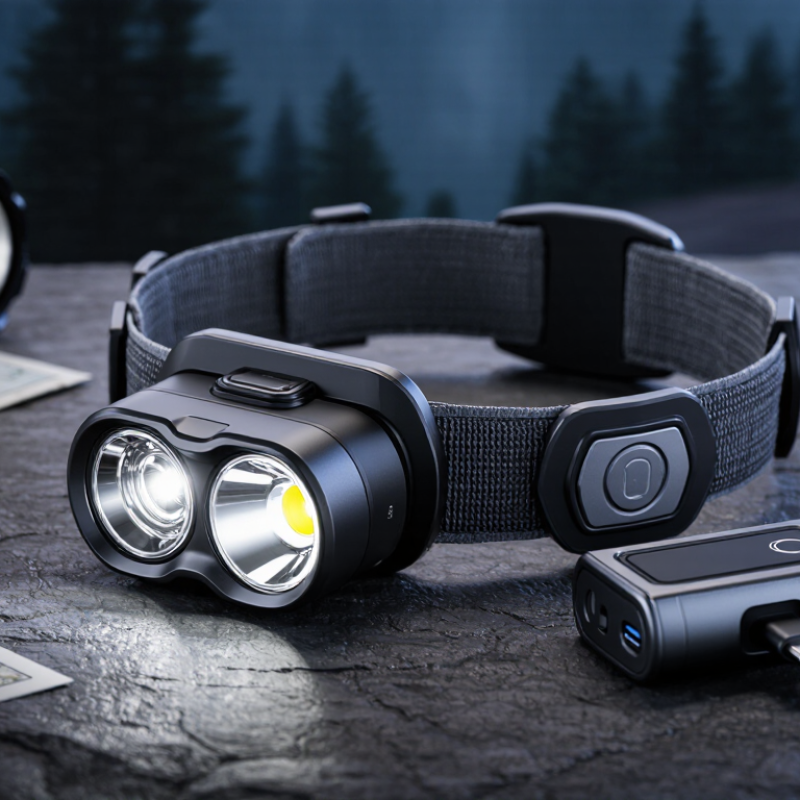
A double-light headlamp in 2026 usually combines two lighting functions: a focused beam for distance and a broad flood beam for nearby tasks. The phrase is not a universal technical classification, so two visible LEDs alone do not prove useful dual lighting. Look for separate controls, distinct beam patterns, and a mixed mode if both outputs can run together. On a dim trail, the spot beam can pick out a sign while the flood beam lights nearby roots. Small detail. The exact design varies.
Compare measured performance, not just advertised lumen totals. The ANSI/PLATO FL 1 testing standard sets common methods for reporting beam distance and runtime. Its beam-distance figure uses a 0.25-lux threshold; runtime is measured until output falls to 10 percent of the level recorded after 30 seconds. These figures help compare products, but they do not certify that a headlamp has two useful beams. Check whether the manufacturer reports each mode separately, and whether runtime applies to one beam or both. A published rating can still leave that unclear. Consider weight, battery placement, and how easily you can switch modes with gloves on; a powerful lamp is less practical if its controls are awkward.
| Buyer Dimension | What Defines a Double Light Headlamp | Practical Buying Check | Why It Matters |
|---|---|---|---|
| Light-source layout | Two distinct light sources or optical channels, commonly arranged to provide different beam patterns. | Check whether the two lights can operate independently, together, or in selectable modes. | A dual-source layout can offer more lighting options, but “double light” does not by itself guarantee greater brightness. |
| Beam combination | A common configuration pairs a focused spot beam with a wider flood beam. | Look for a clearly described spot, flood, or combined mode; inspect beam photos or test reports when available. | A spot beam helps illuminate distant points, while a flood beam provides wider, closer-range visibility. |
| Brightness measurement | Brightness is commonly stated in lumens, but output figures are only useful when the measurement method and mode are clear. | Compare measured output by mode, not just the highest advertised lumen figure. Check whether output falls as the light heats up. | Peak output may be brief; sustained output is more relevant for longer tasks. |
| Beam distance | Beam distance describes how far the beam reaches under a defined measurement method. | Look for a tested beam-distance figure and its associated mode. Under ANSI/PLATO FL 1, distance is based on the range at which illuminance reaches 0.25 lux. | A longer stated distance does not describe how wide or useful the beam is at close range. |
| Runtime | Runtime varies with brightness, beam selection, battery condition, and temperature. | Compare runtime for the exact mode you expect to use. ANSI/PLATO FL 1 runtime testing measures the time until output falls to 10% of its initial value. | Runtime claims can differ substantially between high and low modes, so mode-specific figures are important. |
| Water resistance | Water resistance should be identified by a stated IP rating rather than a vague “waterproof” description. | IPX4 indicates protection against splashing water; IPX7 indicates protection under specified temporary-immersion test conditions. | Choose a rating appropriate to expected exposure, and check the manufacturer’s instructions before using the headlamp in water. |
| Power and charging | Double-light headlamps may use replaceable batteries, rechargeable cells, or a rechargeable built-in battery. | Check battery type, charging connector, charging time, and whether the light can be used while charging. | Power compatibility affects operating cost, replacement options, and readiness for extended use. |
| Weight and balance | The two-light assembly, battery, and headband together determine overall comfort and balance. | Compare the stated weight with the battery installed, and check whether the battery is mounted at the front or rear. | Weight distribution and strap fit can matter more than a small difference in total weight during long wear. |
| Controls and mode selection | Controls should make it clear which light or beam is active and how to switch modes. | Check for separate controls, a lockout function, and a low-output option for close work or preserving night vision. | Simple controls reduce accidental activation and make mode changes easier while wearing gloves. |
| Best-use fit | The most suitable design depends on whether the priority is close-up work, trail use, camping, or general outdoor tasks. | Choose a wide flood beam for nearby work, a focused beam for distance, or a combined mode when both are needed. | There is no single best configuration for every buyer; matching beam pattern and runtime to the task is more useful than choosing by the “double light” label alone. |
It combines a wide beam for nearby details with a focused beam for distance. Roots and rocks become easier to spot. Not every path looks clearer, though.
Some models allow both beams to run together; others require switching modes. Check the controls before buying. Try them with gloves on.
No. Strong light can cause glare and hide nearby detail, especially on wet ground. A moderate setting may feel clearer.
Make sure it stays put when you look down. Test it over a hat or helmet, and check for pressure from the front housing.
Check runtime for each mode and the conditions used for testing. Some standards measure runtime until light output falls to 10 percent, not until darkness. Cold weather can shorten useful runtime.
A wide beam can light screws and wire colors across a bench. A focused beam helps you see inside a cabinet. Small buttons can be awkward.
Compare beam pattern, weather resistance, weight, and strap stability. Aim the light at the ground ahead, not into another person’s eyes.
Shine both beams at a wall and look for glare or a dark gap. Test your chosen mode at home. I would not trust a tidy spec sheet alone.
A double light headlamp uses two complementary light sources to help users see both nearby details and farther paths. In 2026, this design can offer more flexible illumination than a single-beam lamp, supporting safer movement in changing conditions. When comparing options, consider beam patterns, brightness settings, controls, and whether the lights can be used independently or together. A well-designed Headlamp Double Light should make it easy to adjust illumination without interrupting the task at hand.
The right model depends on its intended use, whether for work, outdoor activities, or emergency preparedness. Check realistic battery performance across different settings, charging options, and how comfortably the headlamp fits during extended wear. Durability, resistance to everyday exposure, and ease of maintenance also matter. Rather than focusing on one specification alone, weigh comfort, reliability, useful lighting modes, and overall value to choose a headlamp suited to your needs.

 MENGTING