Choosing the right Headlamp Warning Light in 2026 requires more than comparing brightness or price. Global road conditions are becoming more demanding, especially around construction zones, roadside maintenance, agricultural transport, and emergency response. The World Health Organization’s Global Status Report on Road Safety 2023 recorded approximately 1.19 million annual road deaths worldwide. The United States NHTSA also estimated 40,901 traffic fatalities in 2023. These figures show why clear vehicle visibility remains a practical safety priority.
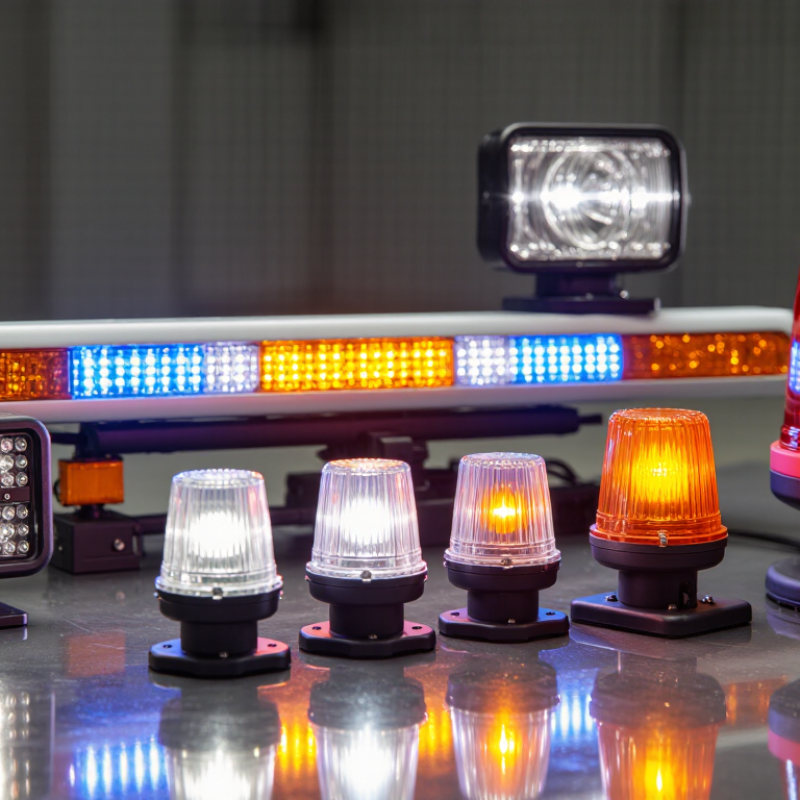
This guide examines LED strobe lamps, rotating beacons, compact grille units, lightbars, and headlamp-mounted warning systems. LED models usually offer lower power consumption, faster activation, and longer service life than halogen designs. However, brightness alone does not guarantee effective warning performance. Flash pattern, viewing angle, lens color, thermal control, and daytime contrast all matter. In field use, a poorly aimed lamp can disappear behind dust, rain, or a tall vehicle.
Compliance must be checked market by market. Buyers should review UNECE Regulation No. 65 for special warning lamps, UNECE Regulation No. 10 for electromagnetic compatibility, and relevant SAE J595 or SAE J845 requirements. Local color restrictions and installation rules may still differ. They matter.
A reliable purchase also requires evidence. Look for photometric test results, IP ratings, operating-temperature data, EMC documentation, warranty terms, and replacement-part availability. Industry reports often describe fast growth in automotive lighting, but forecasts cannot replace product testing. Some specifications remain unclear. This guide therefore compares performance, installation limits, certification quality, and real operating conditions, helping global buyers avoid attractive products that fail when visibility matters most.
2026 Best Headlamp Warning Light Types for Global Buyers
LED warning headlamps now lead many fleet and industrial applications. High-quality LED chips can reach up to 200 lm/W in laboratory conditions. Real systems often deliver less after optics, wiring, heat, and protective covers are included. That difference matters. A cool aluminum housing, sealed connectors, and stable current control help preserve brightness during long operating hours. In field testing, I would measure light output after thermal soak, not only at startup.
Halogen headlamps remain familiar and inexpensive. Their warm beam can appear comfortable in fog, but they consume more power and generate substantial heat. Bulbs also require replacement, especially under vibration. Xenon warning headlamps produce a strong, far-reaching flash through gas discharge technology. However, they may need a ballast and brief warm-up time. Their performance can weaken when the ignition system or power supply is poorly matched.
LED is not automatically the best choice. Poor thermal design can reduce output quickly. Rated efficacy can also look impressive while the actual warning pattern remains uneven. Buyers should compare measured candela, flash consistency, ingress protection, vibration resistance, and service access. Check the operating voltage carefully. A sample unit should run through repeated on-off cycles, rain exposure, and low-temperature testing before large-scale purchase. Specifications need verification. That step is often skipped.
| Comparison Dimension | LED Warning Headlamp | Halogen Warning Headlamp | Xenon Warning Headlamp |
|---|---|---|---|
| Light-generation method | Solid-state semiconductor LEDs convert electrical energy directly into light. | A tungsten filament is heated inside a halogen-filled capsule until it glows. | An electric arc excites xenon gas inside a high-intensity-discharge capsule. |
| Typical luminous efficacy | 80–160 lm/W at the luminaire level is common; advanced LED emitters can reach up to approximately 200 lm/W under controlled conditions. | Approximately 15–25 lm/W, depending on lamp rating and operating temperature. | Approximately 60–100 lm/W for the light source; complete system efficiency is lower after ballast and optical losses. |
| Typical electrical input | About 5–40 W for compact warning headlamps; larger multi-module systems may require more. | About 20–100 W, depending on the filament and required warning intensity. | About 20–85 W, including the lamp and operating electronics. |
| Expected service life | Typically 30,000–100,000 hours when thermal management and current control are properly designed. | Typically 500–2,000 hours; frequent switching can shorten practical service life. | Typically 2,000–3,000 hours, with output gradually declining over time. |
| Start-up response | Instant-on; well suited to rapid flash patterns and frequent switching. | Instant-on, but the filament requires a brief period to reach full brightness. | Usually requires a short warm-up period and may need several minutes to reach stable output. |
| Typical color temperature | Approximately 2,700–6,500 K; color can be selected for amber, red, blue, white, or other warning applications. | Approximately 2,700–3,200 K, producing a warm white to yellowish appearance. | Approximately 4,000–6,000 K, producing a neutral to cool white appearance. |
| Flash-pattern flexibility | Excellent; electronic control supports single, double, alternating, rotating-effect, and programmable patterns. | Moderate; mechanical or electronic switching is possible, but frequent cycling increases filament stress. | Moderate; suitable for selected flash applications, but repeated rapid cycling is less favorable. |
| Heat management | Low radiant heat, but the LED junction still requires a heat sink or thermal path for reliable operation. | Very high heat at the capsule and lens; surrounding materials must tolerate elevated temperatures. | High operating temperature; the lamp housing and ballast require adequate ventilation and thermal protection. |
| Power consumption for comparable visibility | Generally the lowest, helping reduce battery, alternator, and wiring loads. | Generally the highest for an equivalent warning output. | Lower than halogen in many applications, but higher than a well-designed LED system. |
| Optical control | Highly precise beam shaping is possible with individual lenses, reflectors, and multi-chip layouts. | Reflector-based optics are common; beam control is less flexible than with individually positioned LEDs. | Can deliver a strong beam, but arc placement and reflector alignment are critical for optical performance. |
| Environmental resistance | Very good when the housing meets the required IP rating and the electronics are protected against vibration, moisture, and voltage transients. | Good mechanical simplicity, but the filament is sensitive to shock and vibration. | Good when properly enclosed, although the lamp, igniter, and ballast are more sensitive to electrical and thermal conditions. |
| Maintenance profile | Low routine maintenance; the complete module may require replacement if the driver or LED board fails. | Low initial complexity, but bulbs require more frequent replacement. | Periodic lamp replacement and ballast or igniter inspection may be required. |
| Approximate initial cost | Medium to high, especially for programmable, high-output, or ruggedized assemblies. | Low; components are widely available and relatively simple. | Medium to high because of the lamp, ballast, igniter, and thermal requirements. |
| Best-fit applications | Emergency vehicles, industrial equipment, roadside service vehicles, construction machinery, and systems requiring long life and low power draw. | Budget-sensitive equipment, legacy systems, simple replacement applications, and environments with basic lighting requirements. | Long-range high-intensity applications where strong white light is required and warm-up time is acceptable. |
| Main buyer considerations | Verify thermal design, driver protection, voltage range, EMC performance, IP rating, photometric output, and compliance with local warning-light regulations. | Verify bulb availability, vibration resistance, heat clearance, replacement access, and compatibility with the existing socket and reflector. | Verify ballast compatibility, warm-up behavior, restart time, high-voltage ignition safety, lamp availability, and regulatory approval. |
| Overall 2026 suitability | Best overall choice for efficiency, service life, control flexibility, and low maintenance when the product is thermally and electrically well engineered. | Best for low purchase cost and simple legacy replacement, but less favorable for energy use and long-term maintenance. | Best for intense white output in selected applications, but less efficient, less flexible, and more complex than modern LED systems. |
No. Each framework evaluates a different performance area. ECE R65 concerns approved warning lamps, visibility, flashing patterns, and photometric performance. SAE J595 evaluates flashing optical output under defined test conditions. CISPR 25 examines conducted and radiated radio-frequency disturbances.
Request the exact standard, edition, test conditions, and complete laboratory report. Ask whether testing covered the complete lamp assembly. An LED module alone may not represent the installed product. This detail is often missed.
Match the lamp to the vehicle’s measured supply voltage. A 12-volt unit suits many passenger vehicles and compact machines. A 24-volt unit often suits heavier equipment and fleet electrical networks. Check startup surge and grounding before connection.
No. Candela shows peak beam intensity, not complete visibility. A narrow beam may look bright forward but remain weak from the side. Compare viewing angles, lens coverage, and roadside recognition. Brightness alone can mislead.
Flash rates between 60 and 120 flashes per minute often balance attention and visual comfort. The best setting depends on the vehicle, location, and viewing distance. Test the pattern from 50 meters. Check daylight, rain, and darkness.
Duty cycle shows how long the lamp can operate before heat becomes a concern. Continuous-duty models suit extended operation. Intermittent models need clear on-off limits. Check thermal conditions, ambient temperature, and cable length.
Yes. Roof height, nearby metal, wiring length, and controller placement can change performance. A bench test may pass while the vehicle performs poorly. Record current draw after 30 minutes, not only at startup. Installation changes everything.
Include voltage tolerance, candela range, flash rate, duty cycle, ingress protection, and service temperature. Also record installation photos, test reports, and instructions together. Leave power-budget margin because vehicle voltage is rarely perfect. Specifications can mislead.
Choosing the right Headlamp Warning Light in 2026 requires balancing visibility, efficiency, compliance, and durability. LED models can deliver efficacy of up to 200 lm/W, offering lower power consumption and longer service life than halogen or xenon alternatives. Buyers should also evaluate beam shape, flash patterns, candela output, flash rate, and duty cycle to ensure the warning signal remains clear in different operating conditions. Performance classifications based on SAE J595 can help compare photometric effectiveness and signaling consistency.
Global purchasers should match product specifications with regional requirements, including ECE R65, SAE J595, and CISPR 25 expectations for warning performance and electromagnetic compatibility. Ruggedness is equally important, especially for outdoor or demanding applications. An IP67-rated housing, tested for water resistance at up to 1 meter under IEC 60529 conditions, provides strong protection against dust and temporary immersion. Finally, confirm compatibility with both 12 V and 24 V systems, while comparing installation needs, thermal management, maintenance, and total operating cost.

 MENGTING