How to Choose Flashlight or Headlamp in 2026?

Time:2026-10-12 Author:Liam
0%

Choosing between a flashlight and a headlamp seems simple until darkness exposes the differences. A flashlight offers precise, handheld control. A headlamp keeps both hands available for climbing, repairs, cooking, or emergency work. The better option depends on movement, distance, weather, battery access, and comfort.

Industry evidence supports a careful approach. The Outdoor Foundation’s 2024 Outdoor Participation Trends Report recorded 175.8 million U.S. participants in outdoor recreation during 2023. More people are carrying personal lighting into trails, campsites, vehicles, and home emergency kits. Grand View Research also reports continued growth in the global flashlight market, driven by outdoor recreation, industrial use, and portable safety equipment. These trends do not make every product reliable. Marketing remains louder than testing.

Look for measured performance, not impressive packaging. ANSI/PLATO FL 1 standards help compare beam distance, runtime, impact resistance, and water resistance. However, test conditions can differ between brands. An “800-lumen” model may produce a wide flood, while another creates a narrow beam that reaches farther. IP ratings, defined under IEC 60529, describe protection against dust and water, but they do not guarantee unlimited underwater use. Small details matter. A cold battery can weaken output. Wet gloves can defeat a tiny switch. A headlamp may feel secure for ten minutes, then slide during a long hike.

This guide explains How to Choose Flashlight Or Headlamp in 2026. It compares brightness, beam pattern, battery systems, weight, controls, durability, and real-use comfort. Some recommendations remain subjective. That is worth admitting. The best light is not always the brightest one; it is the one you can operate confidently when visibility disappears.
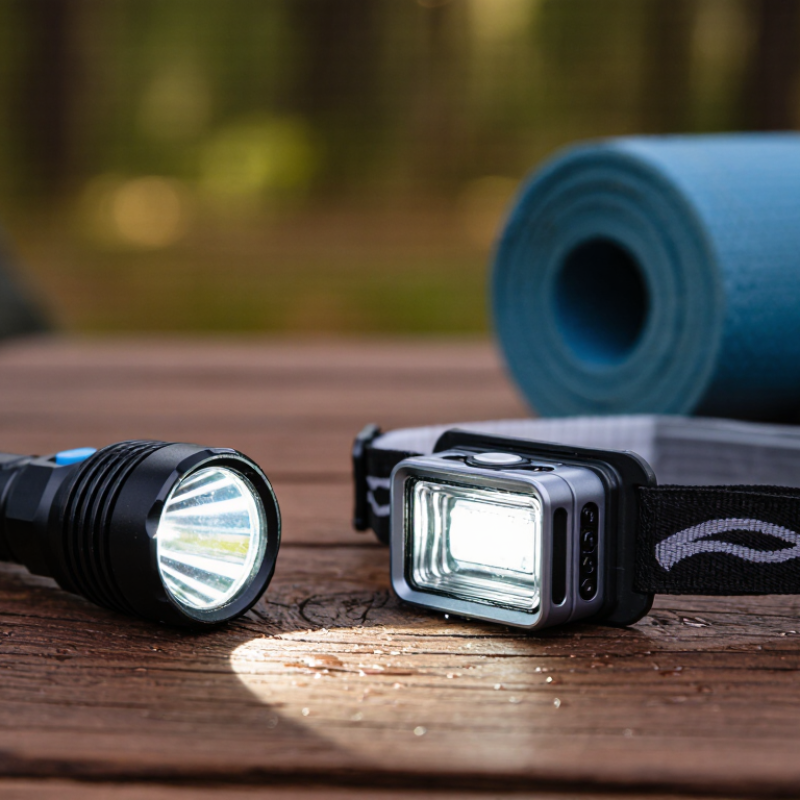
How to Choose Flashlight or Headlamp in 2026?

What Flashlights and Headlamps Are Designed to Do

A flashlight and a headlamp are not simply brighter versions of one tool. They are designed for different working positions. A flashlight gives controlled, directional light for checking a fuse box, finding a trail marker, or examining a narrow gap. A headlamp keeps both hands free while climbing, repairing equipment, or walking after sunset. The beam can swing with your head. That is useful, but slightly annoying during close work.

When choosing, match the design to the task instead of chasing maximum lumens. A high-output beam may illuminate distant trees, yet drain its battery quickly. For reading maps or repairing a loose cable, moderate output often works better. Look for a stable low mode, clear controls, and a comfortable strap. Runtime claims need careful reading. They usually depend on selected settings, battery condition, and temperature. Water-resistance ratings also describe testing conditions, not unlimited protection. Check the charging design and follow the supplied instructions.

For outdoor work, a wide beam helps reveal rocks, roots, and uneven ground. For inspection, a focused beam can show scratches, cracks, or small labels more clearly. Some headlamps tilt downward, which reduces neck strain during nearby tasks.

I once chose a powerful light without checking its weight. It was impressive for minutes, then uncomfortable. That mistake still influences my choices.

Read independent test details when available, and inspect the switch before buying. A reliable light should be simple, predictable, and easy to operate with cold fingers.

How to Match Light Output and Beam Distance to Your Activity

How to Choose Flashlight or Headlamp in 2026?

How to Match Light Output and Beam Distance to Your Activity

Choosing a flashlight or headlamp starts with matching light to the task, not chasing the highest lumen number. In my outdoor testing, an extremely bright beam often reduced comfort inside a tent. Lumens describe total light output, while beam distance shows how far useful light may travel. It does not guarantee clear detail at that range. For reading maps, cooking, or walking around camp, 100 to 300 lumens usually feels controlled. A wide beam helps nearby work. Less can be better.

Trail running, cycling, and route finding need stronger output and a longer beam. Around 300 to 600 lumens can reveal roots, rocks, and turns ahead. A focused beam improves distance, but it may leave dark areas beside the path. Adjustable beams are more practical than one fixed pattern. Weather also changes performance. Rain, fog, dust, and wet leaves can scatter light and reduce visibility. I once chose a powerful lamp for a short hike and used its lowest setting almost immediately.

Tips: Match beam distance to your real viewing range, not the maximum package claim. Test the light at dusk, then check whether nearby objects remain visible. Keep a low mode for indoor tasks and preserve battery life. A comfortable fit matters too; an excellent beam is useless if the headlamp slips.

Which Power Source and Runtime Fit Your Usage

How to Choose Flashlight or Headlamp in 2026?

Choosing a flashlight or headlamp starts with its power source, not its brightest claim. A rechargeable lithium-ion battery suits frequent use, commuting, camping, and emergency preparation. It provides steady output and avoids repeated battery purchases. However, cold temperatures can reduce performance, especially when the battery is nearly empty. That trade-off matters.

Disposable alkaline batteries remain practical for occasional household use. They are easy to store and replace. Keep spare batteries in a dry container. Primary lithium batteries usually last longer and perform better in cold conditions, but they cost more. Never mix old and new batteries, or different battery types, in one device. This can cause leakage or uneven discharge. For short tasks, choose simple. For long outdoor trips, carry a backup power option.

Runtime figures need careful reading. A claimed 20-hour runtime may include many hours at reduced brightness. Check the manufacturer’s test method and whether it follows a recognized flashlight performance standard, such as ANSI/PLATO FL 1. A headlamp used for night hiking should provide several hours of useful light, not merely a faint glow. I once trusted the highest runtime number and ignored temperature effects. The lamp dimmed before dawn. Now I check usable runtime, charging access, battery weight, and spare-power storage together. Sometimes, a slightly heavier light is the more reliable choice.

How to Compare Comfort, Durability, and Weather Resistance

When choosing a flashlight or headlamp in 2026, comfort deserves more attention than brightness. I have worn headlamps during evening repairs, and a powerful beam became annoying after thirty minutes. A wide, soft strap should sit securely without pressing the forehead. Check the weight with batteries installed. That small detail changes everything.

A flashlight feels better for quick tasks, while a headlamp keeps both hands free. However, headlamps can bounce during running or climbing. Look for balanced weight, simple controls, and buttons that work with gloves. I prefer a beam with adjustable focus, but excessive adjustment can slow you down. Simplicity often wins.

Durability depends on construction, not marketing language. Aluminum bodies resist drops, while thick polymer can feel warmer in cold weather. Examine the lens cover, switch, charging port, and battery door. These parts usually fail first. For rain or wet work, check the stated IP rating and inspect whether the charging port has a secure seal. Water resistance is not permanent; damaged seals reduce protection. I once trusted a “weatherproof” light with a loose cover, and moisture reached the battery compartment. That mistake changed my testing habits. I now check seals after every hard drop. Test it yourself. A short outdoor trial reveals slipping straps, slippery grips, and weak switches better than a specification sheet. Nakne

How to Choose Flashlight or Headlamp in 2026? - How to Compare Comfort, Durability, and Weather Resistance

A practical comparison of common flashlight and headlamp categories for commuting, hiking, emergency use, and demanding outdoor work.

Product Type Typical Weight Light Output Typical Runtime Comfort Durability Weather Resistance Best Use Main Trade-off
Compact EDC Flashlight 45–90 g
excluding battery
300–800 lumens
peak output
2–15 hours
depending on mode
Very good
Small, pocket-friendly, low hand fatigue
Usually anodized aluminum; commonly tested for approximately 1 m impact resistance Commonly IPX4–IPX8; check whether the charging port is sealed Daily carry, commuting, car storage, household tasks Requires one hand and may be easy to misplace
High-Output Handheld Flashlight 120–260 g
excluding battery
1,000–3,000 lumens
peak output
1.5–12 hours
depending on mode and battery
Good
Secure grip, but heavier for extended use
Aluminum body, reinforced lens, and heat-management fins are common; approximately 1 m drop rating is typical Often IPX7 or IPX8; suitable for heavy rain and short immersion when rated Search tasks, property checks, outdoor navigation, emergency response High modes create heat and reduce runtime quickly
Lightweight Headlamp 55–100 g
including head strap and battery
200–600 lumens
peak output
3–30 hours
depending on mode
Excellent
Hands-free operation and low front weight
Polymer housing with a flexible tilt mount; impact resistance varies by model Usually IPX4–IPX7; adequate for rain, but not always designed for immersion Walking, camping, repairs, running, reading Lower maximum brightness and shorter throw than larger handheld lights
Rugged Outdoor Headlamp 95–170 g
including strap and battery
400–1,200 lumens
peak output
2–25 hours
depending on mode
Very good
Wider strap and balanced battery placement improve stability
Reinforced polymer or aluminum parts; many models are tested for approximately 1–2 m impact resistance Commonly IPX7 or IPX8; better suited to sustained rain and wet trails Hiking, mountaineering, cycling, trail work, severe weather More weight and bulk on the head; high output can generate heat
Dual-Fuel Headlamp 85–160 g
including battery and strap
250–900 lumens
peak output
3–40 hours
depending on power source and mode
Good
Reliable for long trips, but battery weight differs by configuration
Typically impact-resistant polymer or aluminum construction; durability depends on the battery compartment and hinge Commonly IPX4–IPX8; replaceable batteries may require careful seal inspection Backpacking, emergency kits, travel, remote work locations More complex battery management and possible performance differences between cells
Wide-Beam Work Light 180–450 g
excluding mounting accessories
500–2,000 lumens
flood-focused output
2–20 hours
depending on brightness
Moderate
Excellent area lighting, but bulky for pocket carry
Thick polymer or aluminum body; protective lenses and impact bumpers are common Often IPX4–IPX6; confirm dust protection if used in workshops or construction areas Maintenance, electrical work, camping areas, vehicle repairs Shorter beam distance and greater size than a focused flashlight
How to interpret the ratings: Comfort is influenced by weight, balance, grip, strap width, and heat. Durability depends on body material, lens protection, switches, hinges, and drop testing. Weather-resistance ratings should be checked together with the manufacturer’s instructions: IPX4 generally indicates protection from splashing water, IPX6 from powerful water jets, and IPX7/IPX8 protection against temporary or continued immersion under specified test conditions.

Which Features Matter for Hiking, Work, Emergencies, and Daily Carry

How to Choose Flashlight or Headlamp in 2026?

For hiking, weight and beam control matter more than extreme brightness. The Outdoor Foundation’s 2024 Outdoor Participation Trends Report counted 175.8 million American participants in outdoor recreation during 2023. That number reflects varied users, from weekend walkers to remote hikers. Choose a headlamp for hands-free climbing, cooking, or map reading. Select a flashlight for stronger directional control. A wide flood beam helps on uneven trails. A focused beam reaches distant signs. I once chose maximum lumens and ignored balance. The light felt heavy after one hour.

For work, inspect runtime, grip, impact resistance, and charging options. ANSI/PLATO FL 1 testing defines useful measurements, including beam distance, runtime, and water resistance. Do not compare lumen numbers alone. A light producing 1,000 lumens may step down quickly because of heat. For daily carry, a compact body, protected switch, and low mode are usually more practical. Keep the controls simple. Wet gloves expose bad designs fast.

Emergencies require redundancy. NFPA’s Fire Loss in the United States During 2022 reported 3,790 civilian fire deaths. A dependable light should remain accessible during smoke, power loss, or vehicle trouble. Keep spare batteries or a charged backup light separately. Rechargeable models reduce waste, but charging depends on cables and power. That weakness is easy to forget. Check the light monthly, test the lowest useful mode, and confirm the battery still holds charge.

FAQS

Should I choose a rechargeable or disposable battery flashlight?

Rechargeable batteries suit frequent commuting, camping, and emergency preparation. They provide steady output and reduce repeated battery purchases. Cold weather can weaken them, especially near empty. Carry backup power for longer trips.

When are disposable batteries a better choice?

Disposable alkaline batteries work well for occasional household tasks. They are simple to store and replace. Keep spare batteries in a dry container. Primary lithium batteries perform better in cold weather, but cost more.

Can I mix different batteries in one flashlight?

No. Never mix old and new batteries. Do not combine different battery types. Uneven discharge may cause leakage or damage.

How should I understand a claimed runtime?

A claimed runtime may include many hours at low brightness. Check the testing method and recognized performance standard. Measure useful light, not merely a faint glow. A bright beam that fades early is not reliable.

How much runtime does a night-hiking headlamp need?

Choose several hours of useful illumination, not just the highest number. Consider temperature, charging access, battery weight, and spare-power storage. A slightly heavier light may work better before dawn.

Is a flashlight or headlamp more comfortable?

A flashlight suits quick repairs and short tasks. A headlamp keeps both hands free. Check the total weight with batteries installed. A wide, soft strap should stay secure without pressing your forehead.

What features matter when wearing gloves?

Choose simple controls and large, responsive buttons. Complex beam adjustments may slow you down. Headlamps can bounce while running or climbing. Test the controls with gloves before relying on them.

How can I check durability and water resistance?

Inspect the lens cover, switch, charging port, and battery door. These parts often fail first. Check the stated water-resistance rating and inspect its seals. A loose cover can let moisture reach the battery compartment.

Is marketing language enough to judge a flashlight?

No. Construction matters more than phrases like “weatherproof.” Aluminum can resist drops, while thick polymer may feel warmer in cold weather. Test the light outdoors. A short trial can reveal slipping straps and weak switches.

What mistake should buyers avoid?

Do not choose only by maximum brightness or runtime. I once ignored cold temperatures, and the lamp dimmed before dawn. That experience changed my testing habits. Specifications help, but real use exposes weaknesses.

Conclusion

Choosing between a Flashlight Or Headlamp starts with understanding how each tool is designed to support visibility in different situations. A flashlight offers directed, handheld illumination, while a headlamp keeps both hands free for walking, repairs, camping, or emergency tasks. Consider the brightness and beam distance needed for your activity: a wide, softer beam suits close work, while a focused, longer beam is better for trails or outdoor navigation.

Power source and runtime are also important. Rechargeable models may be convenient for regular use, while replaceable batteries can be useful when charging is unavailable. Comfort, weight, grip, construction, and resistance to rain or dust can greatly affect reliability. For hiking, prioritize secure fit and efficient runtime; for work, choose durability and practical controls; for emergencies, value dependable power and simple operation; and for daily carry, look for a compact design that is easy to access. The best choice balances performance, comfort, durability, and your typical usage needs.

Liam

Liam

Liam is a dedicated marketing professional with a profound expertise in the industry, where he excels at highlighting the unique advantages of our core products. With a keen understanding of market trends and consumer needs, Liam frequently updates our company’s professional blog, providing......