7 Tips Headlamp or Flashlight Which Is Better?

Time:2026-10-17 Author:Ethan
0%

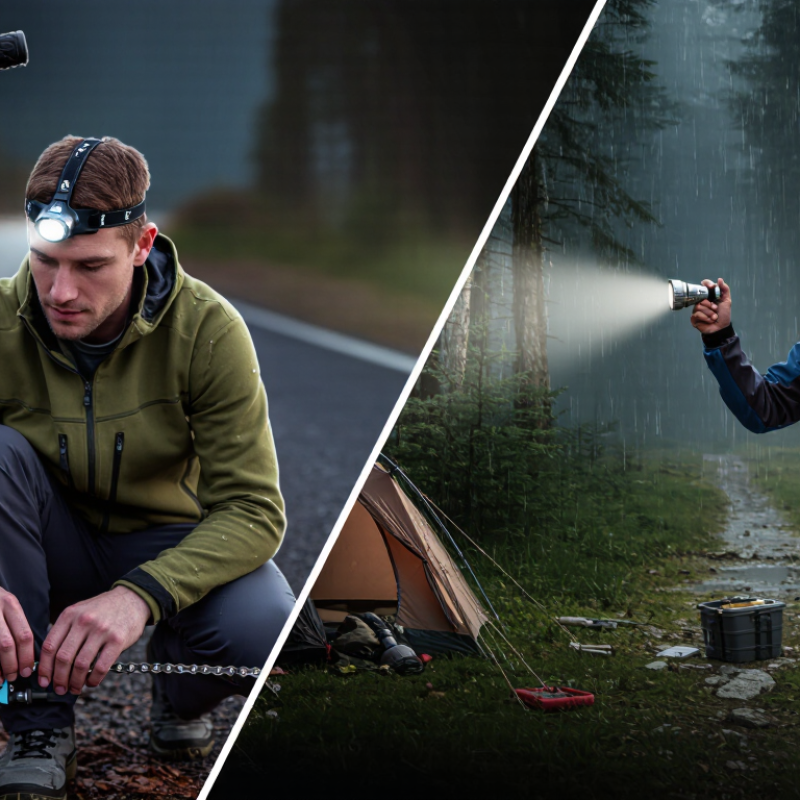
Choosing Headlamp Or Flashlight is not as simple as picking the brightest model. Your environment, task, weather, and hands matter more than marketing numbers. A headlamp keeps both hands free while repairing a bicycle beside a dark road. A flashlight offers precise control when checking a narrow trail or reading a distant sign. The right choice changes with the situation.

Outdoor survival instructor Dave Canterbury often repeats, “Two is one, one is none.” That principle applies to lighting, especially during hiking, camping, and emergency preparation. One light may fail after rain, a dropped battery, or a cracked lens. I have trusted a bright flashlight, then struggled while carrying equipment with one hand. I have also worn a headlamp indoors and disliked the harsh glare on nearby faces. Small details matter.

This guide presents seven practical tips for comparing Headlamp Or Flashlight options. It considers beam distance, battery life, comfort, weather resistance, controls, weight, and backup value. Real use can expose weaknesses that product pages hide. A powerful beam may drain batteries quickly. A lightweight headlamp may shift during running. A compact flashlight may feel secure but leave your hands occupied. There is no perfect answer.

Think carefully. Test both.

The most reliable decision comes from matching the light to your actual routine, not chasing the highest lumen rating. These tips will help you evaluate performance with clearer expectations, safer habits, and fewer expensive mistakes.
7 Tips Headlamp or Flashlight Which Is Better?

Understand the Basic Differences Between Headlamps and Flashlights

7 Tips: Headlamp or Flashlight Which Is Better?

Understand the Basic Differences Between Headlamps and Flashlights

A headlamp sits on your forehead and points wherever you look. A flashlight stays in your hand and offers more deliberate beam control. From trail walks and home repairs, I have found that neither option wins every time.

Tip 1: Choose a headlamp when both hands must remain free.

Tip 2: Choose a flashlight when you need to inspect a narrow area carefully.

A headlamp can illuminate your tools while you work. A flashlight may create clearer shadows for reading surfaces and checking corners.

Tip 3: Check the beam pattern before buying. A wide beam helps with nearby tasks, while a focused beam reaches farther outdoors.

Tip 4: Consider comfort, not only brightness. A heavy headlamp can slide during running, and a slippery flashlight can strain your fingers.

Tip 5: Test the controls with gloves. Tiny buttons become frustrating in cold weather.

Tip 6: Review battery life under realistic settings, not only the highest advertised output. Brightness fades sooner than many users expect.

Tip 7: Carry a backup light during remote trips. It sounds excessive, but darkness changes small problems quickly.

Water resistance, charging options, and impact protection also deserve attention. Look for clear technical specifications and safety guidance from reliable sources.

I sometimes choose a flashlight for jobs where a headlamp would be faster. That choice is not always logical. Still, personal comfort matters. A light that stays in your bag is less useful than a modest light you carry.

Compare Hands-Free Use with Precision Lighting Control

Choosing between a headlamp and a flashlight depends on how your hands must work. A headlamp keeps both hands free while walking, repairing a pipe, or checking a dark stairwell. I notice less fumbling when the beam follows my head. That convenience matters. However, head movement can make the light jump across a room. Looking at another person may briefly shine the beam into their eyes.

A flashlight offers more precise lighting control. You can point its beam at a loose wire, read a small label, or inspect a narrow crack. Some models provide wide and narrow beams for changing distances. In practical testing, a handheld light felt steadier for close inspection, especially when my head kept turning. It requires one hand. That limitation becomes obvious when carrying tools or walking over uneven ground.

For routine outdoor movement, hands-free lighting often feels more practical. For detailed work, controlled aiming usually wins. Still, the choice is not absolute. An adjustable headlamp can reduce the difference, but its battery position may add weight. A flashlight can provide excellent control, though grip fatigue may appear after repeated use. Check brightness claims against real runtime, not packaging language. I have learned that the brightest beam is not always the most useful. Glare, shadows, and poor fit can undermine good specifications. A short home test may reveal more than expected.

Evaluate Brightness, Beam Range, Battery Life, and Comfort

A headlamp or flashlight should be judged by more than its maximum lumen claim. The ANSI/PLATO FL 1 standard defines beam distance at the point where illumination falls to 0.25 lux. It also measures runtime until output drops to 10% of the initial level. These details matter more than a brief, impressive brightness spike. For walking, 150–300 lumens can illuminate nearby roots and steps. For searching across open ground, a longer beam is more useful. A flashlight usually offers stronger hand control and steadier aiming. A headlamp keeps both hands available.

Battery life changes the decision. The U.S. Department of Energy’s Solid-State Lighting report notes that LED efficiency has improved greatly, but heat and battery limits still reduce real-world performance. High-output modes can drain small cells quickly. In my field use, a moderate setting often lasts longer and feels safer than chasing maximum brightness. Rechargeable batteries may reduce waste, while replaceable cells are more practical during long trips. Cold weather can also shorten runtime, an issue that product charts rarely show clearly.

Comfort is less measurable, but it decides whether the light stays on your head. A headlamp needs balanced weight, a soft strap, and controls that work with gloves. A heavy front module can create pressure after an hour. A flashlight avoids that pressure but occupies one hand. The IEC 60529 IP rating helps compare water resistance, yet it does not measure comfort or grip. I sometimes choose the wrong format when conditions change. That uncertainty deserves attention.

Match Each Light Type to Outdoor, Work, and Emergency Needs

Headlamp or Flashlight: Match Each Light Type to Outdoor, Work, and Emergency Needs

A headlamp keeps both hands free, making it practical for hiking, climbing, cycling repairs, and setting up a tent after sunset. Choose one with a comfortable strap, several brightness levels, and a stable beam. A wide beam helps with nearby tasks, while a focused beam reaches farther along a trail. Keep the controls simple. Cold fingers dislike complicated buttons.

A flashlight usually offers stronger directional control and easier aiming. It suits inspections, searching large spaces, workshop repairs, and checking equipment from a distance. Look for a textured grip, a pocket clip, and water resistance suited to your environment. A rechargeable model reduces battery waste, but replaceable batteries can be useful during extended power failures. Check the battery level often.

For emergencies, keep one light in an accessible drawer and another in an emergency kit. Test both every few months. A headlamp works well when carrying water, opening doors, or assisting someone safely. A flashlight may be better for signaling or scanning a wide area. Do not judge performance by brightness alone. Runtime, heat, weather resistance, and beam control matter more. I once chose a very bright light that drained quickly, which made it less useful than expected. That mistake still influences my recommendations. Match the light to the task, not the packaging.

Headlamp or Flashlight: Which Is Better for Each Need?

Ratings use a practical 1–5 scale based on common design characteristics. Headlamps are strongest for hands-free outdoor movement and close-up tasks, while handheld flashlights generally offer better control for focused beams, inspection work, and emergency signaling.

Use Seven Practical Tips to Choose the Better Lighting Option

7 Tips: Headlamp or Flashlight—Which Is Better?

Use these seven practical tips to choose the better lighting option for your task.

Tip 1: Match movement needs. A headlamp keeps both hands free for climbing, repairs, or carrying supplies.

Tip 2: Check beam control. A focused beam helps distance, while a wide beam reveals nearby obstacles.

Tip 3: Compare measured runtime, not advertising brightness. ANSI/PLATO FL 1 testing defines useful terms such as runtime, beam distance, and peak intensity.

Tip 4: Consider weather protection. An IP rating, based on IEC 60529, shows resistance to dust and water.

Tip 5: Study weight and balance. A heavy front unit can become uncomfortable after an hour.

Tip 6: Check the control design with gloves. I have found simple switches safer during cold, rushed tasks.

Tip 7: Choose a light source with efficient power use. The U.S. Department of Energy reports that LED lighting can use at least 75% less energy and last up to 25 times longer than incandescent lighting.

A flashlight may suit precise inspection, signaling, or shared use. A headlamp usually performs better when your hands must stay active.

Brightness alone misleads.

Battery capacity, heat, lens design, and low-mode efficiency also affect real performance. Some published runtimes feel optimistic in cold conditions, so leave a margin. The best choice depends on movement, distance, weather, and how long the light must remain reliable.

FAQS

Should I choose a headlamp or a flashlight for outdoor activities?

Choose a headlamp when both hands must remain free. It helps with climbing, repairs, cycling, and tent setup. A flashlight offers steadier aiming. I sometimes choose the wrong format when plans change.

How many lumens are enough for walking?

Around 150–300 lumens usually reveal nearby roots, steps, and uneven ground. Higher brightness is not always better. It may create more heat and drain the battery faster.

Is beam distance more important than brightness?

It depends on the task. A focused beam helps search across open ground. A wide beam shows nearby obstacles clearly. A bright light with poor beam control can still disappoint.

How should I compare battery runtime?

Check measured runtime, not only the highest brightness claim. Some runtimes are optimistic in cold weather. Leave extra battery capacity for delays, darkness, and repeated checks. Small batteries can empty quickly.

Are rechargeable or replaceable batteries better?

Rechargeable batteries reduce waste and suit regular use. Replaceable cells help during long trips or extended power failures. Keep spare cells dry and accessible. Neither option is perfect.

What makes a headlamp comfortable?

Look for a soft strap, balanced weight, and simple controls. A heavy front unit may cause pressure after one hour. Buttons should work with gloves. Comfort matters more than I first expected.

What features matter in a flashlight?

A textured grip improves control, especially with wet hands. A pocket clip supports quick access. Adjustable beam control helps with inspection and distance. Check the battery level often.

How can I prepare lights for emergencies?

Keep one light in an accessible drawer and another in an emergency kit. Test both every few months. A headlamp helps carry water or open doors. A flashlight can scan wider areas or signal nearby people.

Does water resistance guarantee reliable performance?

No. An IP rating describes resistance to dust and water, not impact strength or grip. Match protection to your environment. Seals can still fail after damage or poor maintenance.

Conclusion

Choosing between a Headlamp Or Flashlight depends on how, where, and why you need portable lighting. Headlamps sit securely on your head and provide hands-free illumination, making them useful for hiking, repairs, camping, running, and emergency situations. Flashlights offer greater control over direction and are often better for focused inspection, signaling, or tasks that require precise beam placement. Understanding these basic differences is the first step toward making a practical decision.

This guide presents seven useful tips for comparing both options. It explains how to evaluate brightness, beam distance, battery life, weight, comfort, durability, and ease of use. It also considers how each light performs in outdoor activities, household work, travel, and unexpected power outages. By matching lighting features to your routine and priorities, you can select the option that provides reliable visibility without unnecessary weight, inconvenience, or expense.


Ethan

Ethan

Ethan is a seasoned marketing professional with a deep expertise in our company's innovative product line. With a passion for sharing knowledge and insights, he takes the lead in regularly updating our corporate blog, where he explores industry trends, product features, and effective marketing......