How to Choose a Mining Light Headlamp?

Time:2026-09-22 Author:Liam
0%

Choosing a Mining Light Headlamp is a safety decision, not merely a brightness comparison. Underground workers need reliable vision around wet rock, moving equipment, narrow shafts, and sudden darkness. The International Labour Organization’s 2023 report estimates that nearly three million workers die annually from work-related causes worldwide. This broad figure reinforces one point: equipment choices deserve disciplined risk assessment.

Industry guidance supports a practical approach. The U.S. Mine Safety and Health Administration emphasizes suitable illumination, equipment maintenance, and hazard awareness in mine-safety guidance. NIOSH research on LED cap lamps also highlights the value of improved visibility, longer operating time, and reduced maintenance. Therefore, compare verified beam performance, battery duration, charging behavior, ingress protection, impact resistance, weight, and attachment stability. A lamp should illuminate loose rock at your feet without creating harsh glare across reflective surfaces. Test it with a helmet, gloves, and a self-rescuer nearby.

No lamp is perfect. A brighter beam may drain the battery faster. A lightweight model may offer less runtime or weaker housing. Marketing figures can also appear impressive without explaining measurement conditions. That is where experience matters. Ask whether the manufacturer publishes test methods, temperature ranges, lumen maintenance, and applicable certification details. Check requirements from the relevant mine operator and national authority before purchase. A dependable Mining Light Headlamp should remain secure during crawling, resist dust and water exposure, and provide usable light near the end of a shift. The best choice is not always the brightest model; it is the one workers can trust, inspect, and operate consistently.
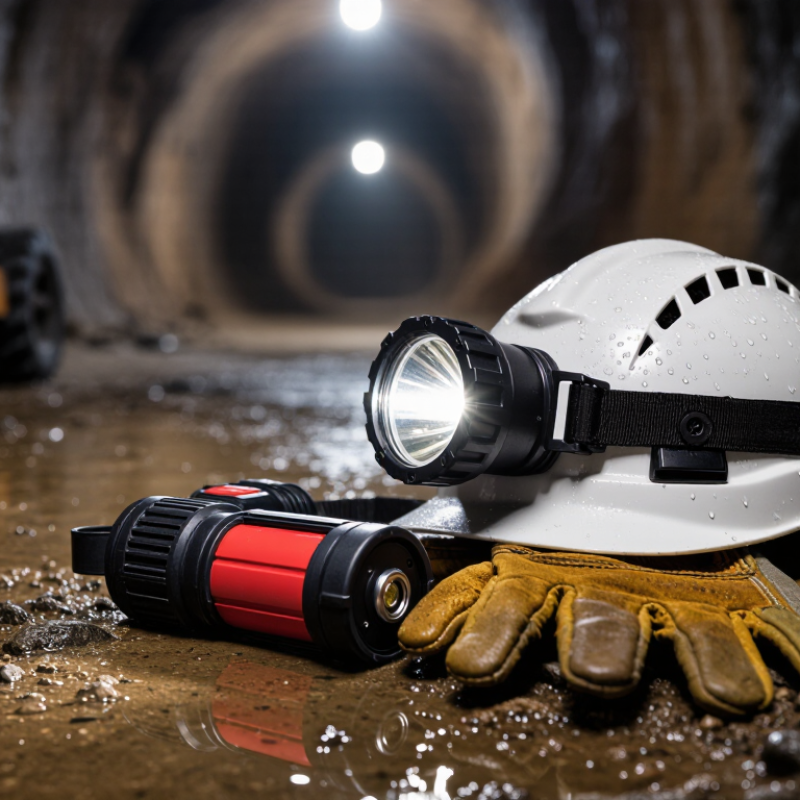
How to Choose a Mining Light Headlamp?

Define Your Mining Worksite and Lighting Requirements

Choosing a mining light headlamp starts with the worksite, not the brightest specification.

An underground heading needs a tight, stable beam for roof checks and equipment controls.

An open-pit haul road needs broader spill light, stronger distance visibility, and reliable performance in rain and dust.

Wet or muddy sites also demand sealed housing and secure switches.

Measure the working area, not only the lamp’s advertised lumens.

A bright beam can still leave dangerous shadows.

The U.S. Mine Safety and Health Administration recorded 40 mining fatalities in 2023.

Its injury statistics show why visibility must support, rather than replace, safe work procedures.

The NIOSH Mining Program Strategic Plan 2023–2027 also identifies human factors and workplace conditions as important research areas.

Check the task distance, required runtime, helmet balance, temperature range, and charging access.

For potentially hazardous atmospheres, confirm the headlamp has certification for the intended area.

Do not assume a general industrial rating is enough.

I have seen selection decisions focus too heavily on brightness.

That was a mistake.

Battery endurance, glare control, and comfortable weight often matter more after several hours underground.

Test the lamp while wearing gloves, hearing protection, and a respirator.

Then inspect the beam from the operator’s actual viewpoint.

A bench test is not the worksite.

Compare Beam Types, Brightness, and Illumination Range

How to Choose a Mining Light Headlamp?

Beam shape often matters more than headline brightness. A narrow spot beam reaches distant tunnel markers and supports route finding. A flood beam spreads light across nearby rock, tools, and uneven ground. A mixed beam is usually more practical underground. It balances distance with peripheral awareness. ANSI/PLATO FL 1 measures beam distance at 0.25 lux, but dusty air can reduce that range sharply. Treat the printed distance as a laboratory reference, not a promise.

Lumens describe total output, while lux describes light arriving on a surface. For close inspection, a very high lumen rating may create glare on pale rock. NIOSH research on miner lighting has emphasized contrast, visual comfort, and glare control, not brightness alone. I prefer adjustable output, with a moderate setting for walking and a stronger setting for distant checks. My own mistake was choosing maximum brightness first. Battery drain and eye fatigue appeared later.

The U.S. Department of Energy’s 2023 Solid-State Lighting R&D Opportunities report identifies LED efficacy above 200 lumens per watt in laboratory development. Field efficiency is lower after optics, heat, dust, and battery losses. Look for a regulated output and a stated runtime at each level. A useful headlamp should illuminate roughly three to five meters broadly, then provide focused reach beyond ten meters when needed. Numbers still need testing. Shine the lamp across a dusty, irregular surface before trusting its range.

Evaluate Battery Life, Charging, and Power Options

Battery life should be judged by useful brightness, not the highest lumen number. The U.S. Department of Energy’s Solid-State Lighting research reports laboratory LED efficacy above 200 lumens per watt, while complete luminaires perform lower. Heat, optics, and battery limits matter. A mining headlamp running at 500 lumens for ten hours may be more valuable than one reaching 1,500 lumens briefly. Check runtime at the working setting, not only the manufacturer’s lowest mode.

Charging quality deserves equal attention. IEC 61960-3 capacity testing uses controlled temperature and discharge conditions, usually around 20°C. Underground work is rarely so predictable. Cold storage, dust, cable damage, and repeated fast charging can reduce real capacity. Choose protected lithium-ion packs with clear charge indicators and documented cycle testing. USB-C charging is convenient, but a sealed charging dock may better protect contacts from moisture and grit. Keep a spare pack available.

Power options should match the shift pattern. Replaceable packs support continuous work, while built-in batteries reduce loose parts and charging errors. External battery packs can balance weight, but their cables may snag. That risk is easy to underestimate. NIOSH mining research has repeatedly linked visibility with hazard recognition, so dimming during the final hours is not a minor inconvenience. I would test every lamp underground, at low temperature, after several charging cycles. Rated performance is useful. Field evidence is better.

How to Choose a Mining Light Headlamp? — Evaluate Battery Life, Charging, and Power Options
Power Configuration Typical Battery Capacity Typical Runtime on Medium Output Typical Runtime on High Output Typical Charging or Replacement Time Charging and Power Options Advantages Limitations Best Use Case
Integrated Rechargeable Lithium-Ion Battery 1,500–4,000 mAh; approximately 5.5–14.8 Wh at a nominal 3.7 V Approximately 6–18 hours, depending on LED output, temperature, and battery condition Approximately 2–6 hours Approximately 3–8 hours using a suitable USB charger USB-C or another manufacturer-specified charging input; use a charger that matches the required voltage and current Charging is required between shifts; the internal battery may be difficult or impossible to replace; capacity decreases over time Regular shift work where charging facilities are available
Replaceable Rechargeable Lithium-Ion Pack Typically 2,000–5,000 mAh; approximately 7.4–18.5 Wh at a nominal 3.7 V Approximately 8–24 hours Approximately 3–8 hours Approximately 3–8 hours per pack; a spare pack can provide continuous operation Dedicated charging cradle, USB charger, or approved external charger, depending on the battery design Spare packs add cost and weight; lithium-ion cells require protection from impact, heat, short circuits, and overcharging Multi-shift operations, remote mining areas, and applications requiring quick battery changes
Alkaline AA or AAA Batteries Approximately 2–4 Wh for a typical three-cell configuration, depending on cell size and load Approximately 4–20 hours Approximately 1–6 hours No charging time; replace cells when depleted Uses standard disposable AA or AAA cells; no external charging equipment is needed Easy to obtain, simple to replace, and suitable for emergency backup use Higher operating cost over time; performance can decline quickly at high output and in cold conditions; disposable cells create more waste Backup lighting, temporary work, and locations where rechargeable battery charging is unavailable
Rechargeable Ni-MH AA or AAA Batteries Approximately 2–4 Wh for a typical three-cell configuration Approximately 3–15 hours Approximately 1–5 hours Approximately 2–8 hours, depending on charger type and cell capacity Requires a compatible Ni-MH charger; cells can be replaced individually Reusable, widely available, and less dependent on a proprietary battery pack Lower energy density than lithium-ion; runtime and performance vary significantly with cell quality and charger design Users who want replaceable rechargeable cells and a widely available backup system
Hybrid Rechargeable and Replaceable-Battery Design Rechargeable pack commonly 1,500–4,000 mAh, with an additional emergency battery option Approximately 6–24 hours, depending on the active power source Approximately 2–8 hours Approximately 3–8 hours for the rechargeable pack; replacement batteries provide immediate backup USB charging plus a compatible replaceable battery compartment or spare pack Usually more complex, heavier, and potentially less compact than a single-battery design Professional mining, emergency response, and long-duration work with uncertain access to power
External Battery Pack with Cable Approximately 3,000–10,000 mAh; energy depends on pack voltage and usable capacity Approximately 12–40 hours Approximately 4–12 hours Approximately 4–10 hours, depending on battery size and charger output Separate battery pack connected by a cable; may support USB charging or a dedicated connector Long runtime, reduced weight on the forehead, and easier battery replacement or carrying The cable and pack can snag, require secure mounting, and may be less convenient in confined spaces Extended shifts where maximum runtime is more important than compactness
Runtime figures are typical planning ranges rather than guarantees. Actual performance depends on LED output, beam mode, battery age, ambient temperature, charging efficiency, cable losses, and whether the headlamp uses regulated output. For mining environments, verify the required safety certification, ingress protection, temperature rating, and battery safety requirements before purchase.

Check Durability, Safety Ratings, and Environmental Protection

How to Choose a Mining Light Headlamp?

Durability comes before brightness in underground work. Choose a headlamp with a shock-resistant housing, secure straps, and sealed switches. Dust and water ingress can quickly weaken ordinary lighting equipment. The IEC 60529 standard defines IP protection levels, such as IP67 for dust-tight protection and temporary immersion resistance. However, an IP rating does not prove resistance to impact, chemicals, or battery failure. Check those conditions separately.

A bright beam is not automatically safer. Glare can hide uneven ground, loose cables, or changing tunnel surfaces. The International Labour Organization reports that mining employs about 1% of the global workforce but causes roughly 8% of fatal occupational accidents. Reliable lighting deserves serious attention.

Safety certification must match the mine’s hazard classification and local requirements. Look for documented testing under relevant explosive-atmosphere standards, including the IEC 60079 series where applicable. Confirm the approval covers the complete lamp, battery, charger, and operating conditions. Environmental protection also includes temperature range, humidity, vibration, and charging performance.

One weakness remains: published lumen figures rarely reflect dirty lenses or aging batteries. Test the lamp after several hours, not only when fully charged.

Tips: Inspect seals before every shift. Clean the lens with a soft cloth. Test the backup light underground. Carry a spare battery only when site rules permit it. Record failures, even minor ones. Small defects become serious underground. An independent inspection record is more useful than marketing language.

Assess Comfort, Mounting Design, and Long-Term Maintenance

How to Choose a Mining Light Headlamp?

A mining headlamp must feel stable after hours underground. During a 12-hour shift, pressure points become obvious. Check the strap width, padding, and adjustment range with a helmet. NIOSH ergonomics research links poorly fitted equipment with discomfort, fatigue, and reduced attention. A lighter lamp helps, but balance matters more than weight alone. I once tested a compact model that felt light initially. Its front-heavy design became tiring by the sixth hour.

Mounting design deserves careful inspection. The bracket should resist vibration, mud, and repeated helmet movement. A loose lamp can create dark spots while walking, climbing, or reading instruments. MSHA recorded 40 mining fatalities in the United States during 2023, showing why visibility supports broader risk control, although it cannot prevent every incident. Select equipment certified for the intended hazardous environment. IEC 60079 requirements are useful references for explosive atmospheres. Follow site rules and local approval requirements.

Tips: Test the lamp with gloves. Operate its switch using one hand. Inspect the cable, bracket, lens, and battery contacts before every shift. Clean mud with a damp cloth, not compressed air near seals. Rechargeable batteries need scheduled replacement, even when runtime appears normal. Keep a maintenance log. It may seem excessive, but small faults often develop quietly. Record charging time, brightness changes, and damaged mounts. Replace worn parts early. Do not rely on memory.

How to Choose a Mining Light Headlamp

A practical 100-point evaluation model for comparing comfort, mounting design, illumination reliability, protection, and long-term maintenance.

Comfort and mounting stability receive the highest weighting because a headlamp must remain secure and comfortable during long shifts. Runtime, ingress and impact protection, and maintenance access should then be checked against the working environment and service schedule.

FAQS

How should I compare a mining headlamp’s battery life?

Compare runtime at the brightness you actually use. A ten-hour, 500-lumen setting may outperform a brief 1,500-lumen mode. Check real working brightness, not the lowest advertised setting. Numbers can mislead.

How do underground conditions affect battery performance?

Cold storage, dust, damaged cables, and repeated fast charging can reduce capacity. Laboratory tests use controlled temperatures and discharge conditions. Underground conditions are rougher. Test the lamp in low temperatures before trusting its rating.

Is USB-C charging suitable for underground work?

USB-C charging is convenient and widely available. However, exposed contacts may collect moisture and grit. A sealed charging dock can offer better protection. I would inspect the port after every dusty shift.

Should I choose replaceable or built-in batteries?

Replaceable packs support continuous work during long shifts. Built-in batteries reduce loose parts and charging mistakes. Keep a spare pack available when possible. The best choice depends on shift length and site routines.

What should I check when using an external battery pack?

External packs can reduce front weight and improve balance. Their cables may snag on ladders, rails, or clothing. Route cables carefully and test climbing movements. That risk is easy to underestimate.

How can I make sure the headlamp remains comfortable?

Check strap width, padding, adjustment range, and front-to-back balance. Wear it with the helmet and gloves you normally use. A light lamp may still feel tiring if it is front-heavy. Comfort changes after six hours.

What mounting features matter most?

The bracket should resist vibration, mud, and repeated helmet movement. A loose lamp can create dark patches while walking or reading instruments. Check the bracket, lens, cable, and contacts before each shift. Small faults grow quietly.

How should I maintain and replace the lamp?

Clean mud with a damp cloth, especially around seals. Avoid using compressed air near protected openings. Record charging time, brightness changes, and damaged mounts. Replace worn parts early. Do not rely on memory. Battery runtime can appear normal before capacity declines.

Conclusion

Choosing the right Mining Light Headlamp begins with understanding your worksite and lighting needs. Consider whether you work in narrow tunnels, open areas, damp locations, or environments requiring hands-free visibility. Compare beam types, brightness, and illumination range to find a balance between focused long-distance lighting and wider area coverage. A suitable beam should improve visibility without creating distracting glare or unnecessary power consumption.

Battery performance is equally important. Evaluate operating time, charging speed, replaceable battery options, and backup power solutions for long shifts. The headlamp should also withstand dust, moisture, vibration, and accidental impacts, while meeting appropriate safety and environmental protection requirements. Finally, assess comfort, adjustable straps, secure mounting, and weight distribution, as these affect long-term wearability. Easy cleaning, battery replacement, and routine maintenance can further improve reliability. By reviewing these factors together, workers can select a dependable headlamp that supports safe, efficient, and comfortable mining operations.


Liam

Liam

Liam is a dedicated marketing professional with a profound expertise in the industry, where he excels at highlighting the unique advantages of our core products. With a keen understanding of market trends and consumer needs, Liam frequently updates our company’s professional blog, providing......