Choosing a Led Headlight Headlamp is not just about finding the brightest option. Drivers may encounter replaceable LED bulbs, projector-style lamps, reflector-style lamps, and integrated headlamp assemblies. These designs differ in how they produce and direct light. A bulb that fits the socket may still work poorly in a housing designed for another light source. Fit matters.
Projector lamps use a lens to shape the beam, while reflector systems direct light with a mirrored surface. Integrated LED assemblies combine the light source and housing, so replacement may involve the full unit. Some vehicles also use adaptive systems that adjust the beam as driving conditions change. Details vary by vehicle.
This guide compares the most common types and explains what their designs mean in everyday use. It considers beam focus, installation, heat management, and visibility in rain or on dark roads. A high brightness claim alone tells little about beam control or real-world performance. That part is easy to overlook. Check the vehicle’s specifications and the product’s compatibility information before choosing. Regulations and fitment requirements can vary by location and vehicle, so verify both with reliable sources. There is no universal winner; a suitable headlamp depends on the housing, driving needs, and product quality. Even careful comparisons have limits. Published specifications cannot fully show how a particular beam will look on your own road.
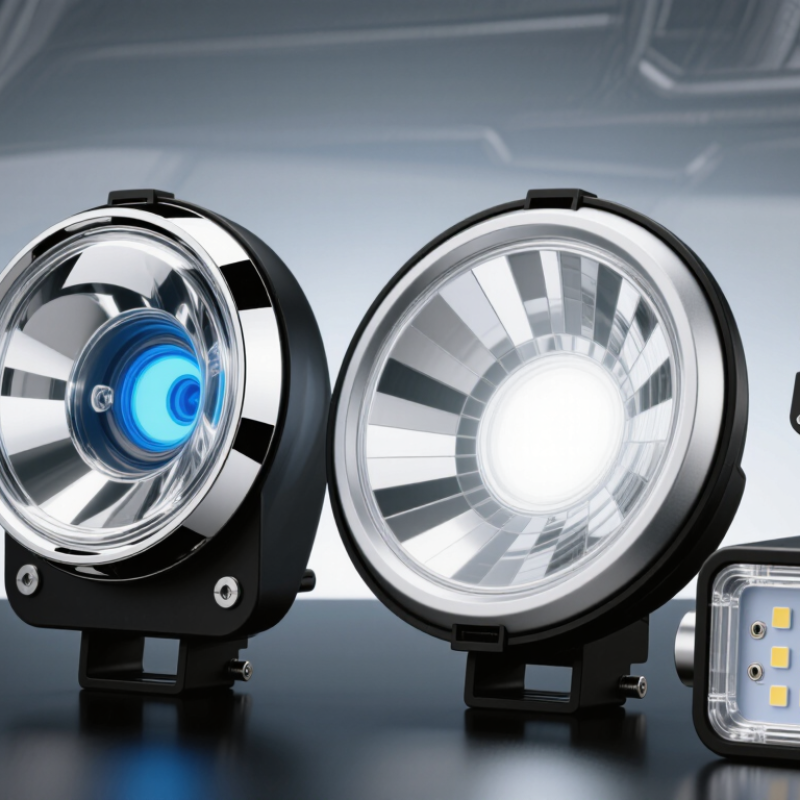
How LED Headlamps Generate and Direct Light
What Are the Top Types of LED Headlight Headlamps?
How LED Headlamps Generate and Direct Light
An LED headlamp creates light inside a semiconductor when electrical current moves through it. The tiny light source produces heat as well as visible light, so the housing needs a heat sink to carry warmth away. Heat matters. If cooling is poor, performance and component life may suffer.
The LED itself does not shape the road beam. Reflectors or projector lenses collect and direct its light, while carefully placed optics help form a defined cutoff. In some designs, several LED elements handle different parts of the beam pattern. This helps illuminate the road without sending unnecessary light upward. Aim matters. A headlamp that looks bright against a garage wall can still be poorly aligned on the road. Small changes in mounting angle affect where the beam lands, especially over distance. Checking the pattern on a level surface can reveal obvious problems, though final alignment may need proper equipment. One detail is easy to overlook: a cooler-looking beam is not automatically brighter or more useful. Distribution, focus, and alignment matter just as much.
Reflector-Based LED Headlamps
Reflector-based LED headlamps use a shaped reflective bowl to direct light onto the road. The LED emitter sits where the original light source was designed to sit, and its position affects the beam pattern. A small difference in height or rotation can create dark patches or send excess light upward. That matters on wet roads, where scattered light can make visibility feel worse. Small changes matter.
The reflector’s condition also plays a role. Dust, cloudy lenses, or damaged reflective surfaces can reduce useful output, even with a bright LED. Heat management is important, too; compact headlamp housings may limit airflow around the LED assembly.
A careful check of beam alignment against a wall can reveal an uneven cutoff or a bright spot above the main beam. Still, judging performance by brightness alone is misleading.
A replacement light source may not match the reflector’s optics, even if it fits the socket. Not always. Compatibility details and measured beam performance deserve more attention than marketing claims, and a qualified technician can assess troublesome patterns.
Projector-Based LED Headlamps
Projector-based LED headlamps use a compact optical system to shape and direct light. An LED source sits behind a reflector, while a lens focuses the beam onto the road. Many designs use a cutoff shield for low beams. This creates a clear upper edge that helps limit light shining toward oncoming drivers. Some systems move the shield or use separate optics for high beams. Details vary by vehicle.
Look closely at the beam pattern, not just its brightness. A well-aligned projector should light the lane and roadside without producing distracting glare. On a dark road, the cutoff may appear as a distinct line on a wall, but aim should be checked with the vehicle’s specified procedure. Even a small change in mounting angle can shift the beam. That matters.
Projectors can provide controlled illumination, though they are not automatically better in every situation. Lens clarity, LED temperature management, and the condition of the headlamp housing all affect performance. Dust or moisture inside the assembly can soften the beam. Some units also have fans or heat sinks that need clear airflow. A brighter-looking beam may feel impressive at first, but useful distance and even coverage matter more. Real roads are uneven, and test results do not tell the whole story.
Matrix and Adaptive LED Headlamps
Matrix and adaptive LED headlamps shape light around changing road conditions. A matrix unit uses separately controlled LED segments. A forward camera can detect traffic and dim only the section aimed at another vehicle, while keeping nearby road space brightly lit. On a dark, wet bend, that can help a driver see the road edge without flooding an oncoming driver’s mirrors with glare.
Adaptive lighting is broader. Depending on the system, beams may shift with steering, speed, or road curvature. Matrix control can be one part of that package, but the terms are not interchangeable. SAE International’s J3069 standard sets test procedures for adaptive driving beam systems. That matters. Real performance still depends on calibration, clean sensors, and how well the system handles signs, hills, and sharp curves.
The safety case needs careful wording. An IIHS 2020 crash-rate analysis found that vehicles with good-rated headlights had 19 percent fewer nighttime single-vehicle crashes than those with poor-rated headlights. The finding covers headlight ratings overall, not matrix LEDs alone. So, it supports better lighting, but does not prove every adaptive system is safer. I’d also want to know how smoothly a beam reacts; a brief delay can be noticeable on a winding road.
Integrated LED Units and Retrofit Bulbs
Integrated LED units and retrofit bulbs solve different problems. An integrated unit combines the light source, reflector or projector, heat sink, and controls in a vehicle-specific assembly. Its optics are designed as one system, which can produce a controlled beam with crisp cutoff lines. The trade-off is repair: a failed component may require replacing more of the assembly. That can cost more. Check whether the unit is serviceable before buying.
Retrofit bulbs replace a lamp’s original bulb while retaining its housing. They can be simpler to install, but the housing was designed for a particular light source and position. A bulb that fits the socket may still scatter light, create dark patches, or send glare toward oncoming drivers. Fit is not beam quality. The Insurance Institute for Highway Safety’s headlight evaluations measure visibility and glare, showing why output alone is a poor comparison. The U.S. Department of Energy’s solid-state lighting reports also distinguish LED source performance from complete-system performance; optics and thermal management affect the result. In practice, inspect beam aim against a wall, then verify the pattern on a dark road. A clean cutoff matters. It is easy to overlook. Check vehicle compatibility and local requirements, too; specifications vary, and a promising bulb can disappoint in an incompatible housing.
What Are the Top Types of LED Headlight Headlamps? — Integrated LED Units and Retrofit Bulbs
This simplified comparison shows typical replacement scope: integrated LED units generally replace the complete headlamp assembly, while retrofit LED bulbs replace the bulb in a compatible existing headlamp. Check vehicle fitment and local regulations before choosing either type.
FAQS
Electrical current passes through a semiconductor, creating visible light and heat. Heat matters.
Heat sinks carry warmth away from the LED. Poor cooling may reduce performance or shorten component life.
Reflectors or projector lenses collect and direct the light. The LED alone does not form the road beam.
A shaped reflective bowl directs light toward the road. The LED’s position and rotation can affect the beam pattern.
A reflector and lens focus the light. Many low-beam designs use a shield to create a defined upper cutoff.
Not necessarily. Beam focus, even coverage, and alignment matter too. Brightness can be misleading.
On a level surface, check for an uneven cutoff or light shining above the main beam. A wall check is only a basic clue.
Dust, cloudy lenses, moisture, or damaged reflective surfaces can weaken useful light. I might be oversimplifying; the exact cause can be hard to see.
No. Design, lens clarity, cooling, and alignment all affect results. Real roads are uneven.
Conclusion
LED headlamps create light by converting electrical energy into illumination, then use optical components to shape and aim the beam toward the road. The design affects how evenly light is distributed, how far it reaches, and how well it limits glare for other drivers. Understanding these differences can help explain why a Led Headlight Headlamp may use one of several approaches.
Reflector-based designs direct light with shaped reflective surfaces, while projector-based systems focus it through a lens for a more controlled beam. Matrix and adaptive headlamps adjust selected portions of the light pattern to respond to changing road conditions. Integrated LED units combine their lighting components in a complete assembly, whereas retrofit bulbs are intended to replace bulbs in compatible headlamp housings. Each type has distinct considerations for beam control, installation, and compatibility.

 MENGTING